Let me tell you about Sarah. She is 29, works in marketing here in San Diego, and runs four days a week because it clears her head. She came to me complaining that she felt weak during her lifts, her hair was thinning at the temples, and she could not understand why she was constantly hungry despite eating what she called a "clean diet." I asked her to track three days of food. Her average protein intake was 52 grams per day at 62 kilograms body weight. That is 0.84 grams per kilogram. She was eating less protein than the RDA recommends for sedentary adults, and she was running and lifting four times a week. No wonder her body was screaming.
Sarah is not an outlier. She is the norm. In my consulting practice, roughly 70 percent of female clients undereat protein by 30 to 50 percent. They are not trying to sabotage themselves. They are following advice that was never designed for active women. The 0.8 gram per kilogram RDA? That was based on nitrogen balance studies in sedentary men decades ago. It does not account for menstrual cycle fluctuations, the higher protein turnover in women who exercise, or the fact that female muscle protein synthesis responds just as robustly to leucine-rich meals as male MPS does.
The International Society of Sports Nutrition position stand on protein and exercise explicitly notes that when females are the only sex investigated, supplemental protein does not always enhance maximal strength at statistically significant magnitudes. Some researchers have misread this as evidence that women need less protein. That is not what the data says. What it says is that many studies use suboptimal protein doses for women, and that total daily intake might be as important or more important than timing. When Josse and colleagues gave non-resistance-trained women one liter of skimmed milk after exercise, seven of nine strength measures improved. When Taylor and colleagues used whey protein in female collegiate basketball players, bench press one-rep max increased by 4.9 kilograms versus 2.3 kilograms in the placebo group. Women respond to protein. They just need enough of it.
So why are women specifically falling short? Part of it is cultural. The fitness industry has spent years marketing protein to men with images of hulking bodybuilders and tubs of whey the size of gasoline cans. Women have been sold salads, detox teas, and 1,200-calorie meal plans. The message, intentional or not, is that protein is a guy thing and women should worry about calories and cardio. That message is garbage. Muscle is not gendered. Amino acids do not care about your pronouns. Your biceps need leucine whether you are male, female, or anywhere on the spectrum.
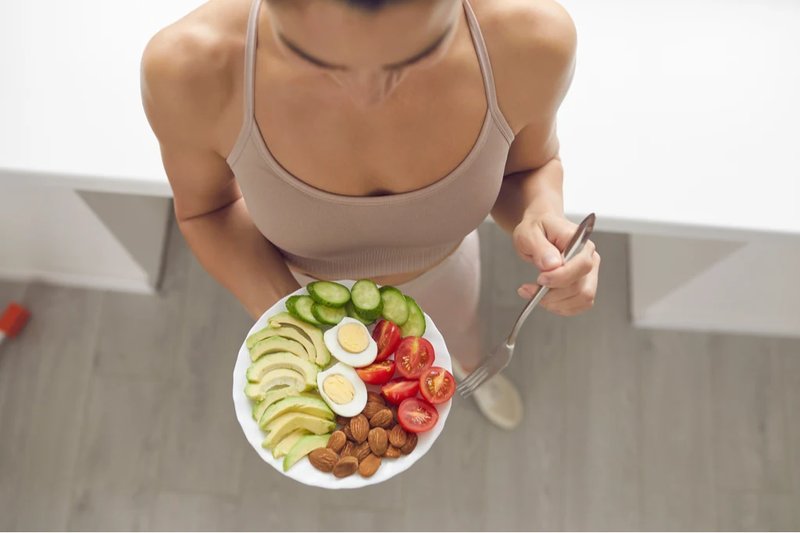
Another issue is portion distortion. Many women I work with genuinely believe they are eating enough protein because they had chicken at dinner. But that chicken breast was 100 grams raw, which cooks down to about 30 grams of actual protein. One meal with 30 grams does not cut it when you need 120 grams daily. You need protein at breakfast, which most women skip or replace with a granola bar containing six grams. You need protein at lunch, which is often a salad with a sprinkle of chickpeas. By dinner, the math is impossible.
| Body Weight (kg) | Sedentary (g) | Active / Lifting (g) | Athlete / Cut (g) |
|---|---|---|---|
| 50 kg (110 lb) | 40 | 80–100 | 100–120 |
| 60 kg (132 lb) | 48 | 96–120 | 120–144 |
| 70 kg (154 lb) | 56 | 112–140 | 140–168 |
| 80 kg (176 lb) | 64 | 128–160 | 160–192 |
The menstrual cycle also changes the equation. During the luteal phase, progesterone rises and so does basal body temperature. Some research suggests protein oxidation increases slightly during this phase, meaning you may need a bit more to maintain nitrogen balance. I am not saying you need to micromanage your macros by the day of your cycle. But I am saying that a static 50 grams per day is almost certainly too low for any active woman, regardless of where she is in her cycle.
Here is what I tell my female clients. Stop aiming for the minimum. The RDA is a survival threshold, not a thriving threshold. If you train two to four times per week, target 1.6 to 2.0 grams per kilogram of body weight. At 60 kilograms, that is 96 to 120 grams per day. Spread it across three or four meals. Include a protein source at breakfast, even if it is just Greek yogurt with 20 grams. Add eggs to lunch. Keep cottage cheese in the fridge for a before-bed snack with 25 grams of casein. These are not complicated changes. They are cumulative.
I also want to address the fear of getting "bulky." I have had clients literally refuse to increase protein because they were afraid it would make them look like a CrossFit Games athlete. That is not how muscle growth works. Getting bulky requires years of progressive overload, a calorie surplus, and genetic predisposition. Eating 100 grams of protein instead of 50 grams will not accidentally turn you into a physique competitor. What it will do is help your hair grow back, stabilize your energy, reduce cravings at 9 PM, and make you stronger in the gym. Those are the outcomes I see every week.
Sarah is now eating 115 grams of protein daily. She stopped losing hair in the shower. Her running pace improved because she was not chronically under-fueled. She sent me a text last week that said, "I cannot believe I was starving myself and calling it healthy." That text is why I do this. The fitness industry has failed women on protein. We can fix it one gram at a time.
Frequently Asked Questions
How much protein does a woman need to build muscle?
Active women should aim for 1.6 to 2.0 grams per kilogram of body weight daily, distributed across 3–4 meals. This supports muscle protein synthesis and recovery without requiring excessive calorie intake.
Does protein make women bulky?
No. Muscle growth requires progressive resistance training, a calorie surplus, and years of consistency. Increasing protein intake supports recovery and strength without causing unwanted mass.
Should women eat more protein during their period?
Some evidence suggests slightly increased protein oxidation during the luteal phase. While you do not need to cycle your intake dramatically, ensuring you hit the higher end of your protein range during this phase may support recovery.
What are the best protein sources for women?
Lean meats, eggs, Greek yogurt, cottage cheese, fish, legumes, and tofu are all excellent. Variety ensures you get a full amino acid profile plus micronutrients like iron, calcium, and B12.
Can women get enough protein on a plant-based diet?
Yes, but it requires more planning. Combining legumes with grains, using soy products, and potentially supplementing with pea or rice protein can help plant-based women meet their leucine and total protein targets.
When was the last time you actually counted your daily protein grams? Be honest. Most women guess, and the guess is usually half of what they need.