I made a stupid bet with my roommate in June. He is a runner. I am a lifter. He said I could not finish the America's Finest City Half Marathon without losing muscle. I said I could do it and actually gain lean mass if I tracked my protein properly. The race was August 16. I had eight weeks. I decided to treat myself like a client and log every gram of protein, every run, and every lift for the thirty days leading up to the event. Here is what actually happened when a strength coach tried to become a runner without becoming skinny.
Week one was humbling. I was running three times per week, lifting three times per week, and my appetite was through the roof. I thought I was eating enough because I was constantly full. Then I logged my first Monday. Breakfast was four eggs and oatmeal. Lunch was chicken and rice. Dinner was salmon and potatoes. Snacks were Greek yogurt and almonds. Total protein? 118 grams. At 88 kilograms body weight, that is 1.34 grams per kilogram. For a guy running twenty miles a week and squatting twice a week, that is maintenance at best. I was undereating by at least 30 grams per day and calling it a bulk. The numbers do not care about how full you feel.
Endurance training increases protein turnover. Most runners know they need carbs. Almost none of them think about protein, and the ones who do usually aim too low. Research from the ISSN suggests endurance athletes need 1.4 to 2.0 grams per kilogram, which overlaps with strength athlete recommendations. The difference is timing. Runners need protein after long runs to repair muscle damage, and they need it distributed across the day because glycogen depletion increases protein oxidation. I was eating 40 grams at dinner and barely 15 grams at breakfast. My distribution was terrible.
So I fixed it. I bumped my target to 165 grams daily, which is 1.875 grams per kilogram. I added a post-run shake with 35 grams of whey within thirty minutes of finishing every run. I moved my breakfast to 35 grams by adding egg whites to my whole eggs. I kept lunch at 40 grams with chicken or turkey. Dinner stayed at 45 grams with fish or beef. The remaining 10 grams came from snacks like cottage cheese or a handful of almonds. It sounds like a lot of food, and it was. But I was running forty-five minutes four days a week and lifting heavy three days a week. My body was burning through calories like a furnace.
Week three was the test. I had a twelve-mile long run on Saturday morning, followed by a leg session on Sunday afternoon. That forty-eight-hour window is where most runners lose muscle. They run long, deplete glycogen, do not refuel properly, and then wonder why their squat drops. I drank my post-run shake immediately. I ate a full meal with 50 grams of protein and 80 grams of carbs within two hours. I had another 30 grams of casein before bed. On Sunday, I squatted 155 kilograms for five reps, exactly what I hit before I started running. The protein protocol worked. My roommate looked annoyed. I loved it.
| Training Day | Protein Target | Carb Target | Key Timing |
|---|---|---|---|
| Easy run day | 160 g | 300 g | Post-run shake within 30 min |
| Long run day | 170 g | 400 g | Meal within 2 hours post-run |
| Lift day (no run) | 165 g | 250 g | Pre-workout meal 2 hours prior |
| Double day (run + lift) | 175 g | 350 g | Shake after run, meal after lift |
| Rest day | 150 g | 200 g | Even distribution across 4 meals |
The psychological part was harder than the physical part. Runners have a weird culture around food. My running group would meet at a coffee shop after Saturday runs and order pastries. I would order an egg sandwich and feel like the weirdo. One guy asked if I was "cutting" because I brought a protein shake to a group brunch. I tried to explain that I was trying to preserve muscle mass while training for a half marathon, and he looked at me like I had just spoken Latin. The running community talks endlessly about carb loading and gels. Protein is an afterthought. That needs to change.
By week four, something unexpected happened. My recovery improved dramatically. I was sleeping better. My resting heart rate dropped from 58 to 52 beats per minute. My legs felt less beat up after long runs. I cannot prove that the protein was solely responsible, but the correlation was strong. Adequate protein supports immune function, reduces muscle damage markers, and helps maintain training volume over time. When you are running forty miles a week, those marginal gains compound fast.
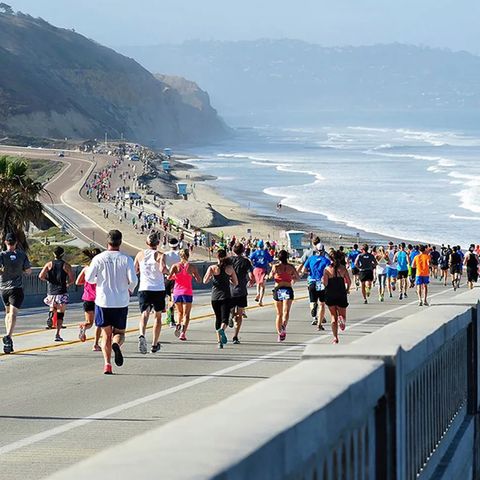
Race day arrived on August 16. The America's Finest City Half Marathon starts at Cabrillo National Monument and winds through Point Loma, Harbor Island, and downtown San Diego before finishing in Balboa Park. It is a beautiful course and a brutal one. I finished in 1 hour 52 minutes, which is not fast by runner standards but respectable for a guy whose primary sport is picking up heavy things and putting them down. More importantly, I weighed myself the morning after the race. I was 87.8 kilograms, exactly where I started. My body fat percentage was unchanged. My squat was still 155 kilograms for five reps. I won the bet.
Here is what I learned. Runners need protein. Not as an afterthought. Not as a "maybe I should have a recovery shake." They need it planned, tracked, and prioritized the same way they prioritize their weekly mileage. If you are training for a half marathon or marathon and you are eating 80 grams of protein per day, you are leaving performance on the table and inviting muscle loss. Bump it to 1.6 to 1.8 grams per kilogram. Drink a shake after every run over six miles. Eat a real meal within two hours. Your legs will thank you, and so will your squat numbers.
My roommate paid up. He bought me ice cream. I did not log it.
Frequently Asked Questions
How much protein do runners need per day?
Endurance athletes should aim for 1.4 to 2.0 grams per kilogram of body weight, with higher targets during intense training blocks or when combining running with strength training.
Should runners drink protein shakes?
Yes, particularly after runs longer than 45 minutes. A 25–35 gram whey shake consumed within 30 minutes post-run supports muscle repair and reduces damage markers.
Can you build muscle while training for a half marathon?
Maintaining muscle is realistic; building significant new muscle is challenging due to the energy demands of high mileage. Prioritize protein, limit weekly running volume if hypertrophy is the primary goal, and keep lifting heavy.
What should runners eat the night before a long run?
A balanced meal with 30–40 grams of protein, 80–120 grams of complex carbohydrates, and moderate fat. Examples include chicken with rice and vegetables, or salmon with sweet potato.
Does running kill muscle gains?
Only if nutrition is inadequate. With sufficient protein intake and controlled running volume, strength and endurance can coexist. The problem is under-fueling, not the running itself.
Are you a runner who lifts, or a lifter who runs? The answer determines your nutrition priorities, and most people get it backwards.